Flower Mound Guide to Spring Lubrication
In Flower Mound, silicone can quiet moving contacts, but it cannot restore lift. Keep winding hardware untouched near Old Town or Lake Park.
Silicone lubricant belongs on spring coils, roller axles, hinges, and bearings; keep the track dry and skip WD-40. Never handle winding cones or bottom brackets under cable tension. If the door binds or remains heavy, worn hardware may be overloading the spring, and more spray will not restore lift.
Lubricate Spring Coils and Bearings
A homeowner can lubricate exposed moving surfaces, then judge whether the door moves more quietly. Use silicone lubricant on spring coils, bearings, rollers, and hinge pivots. Keep tracks free of lubricant because it can hold grit where rollers travel. In Flower Mound, the useful distinction is simple: reduce friction at joints, but do not handle parts that carry spring tension. If the door remains heavy or uneven, stop treating it as a lubrication problem. Lubricant cannot restore lost spring lift.
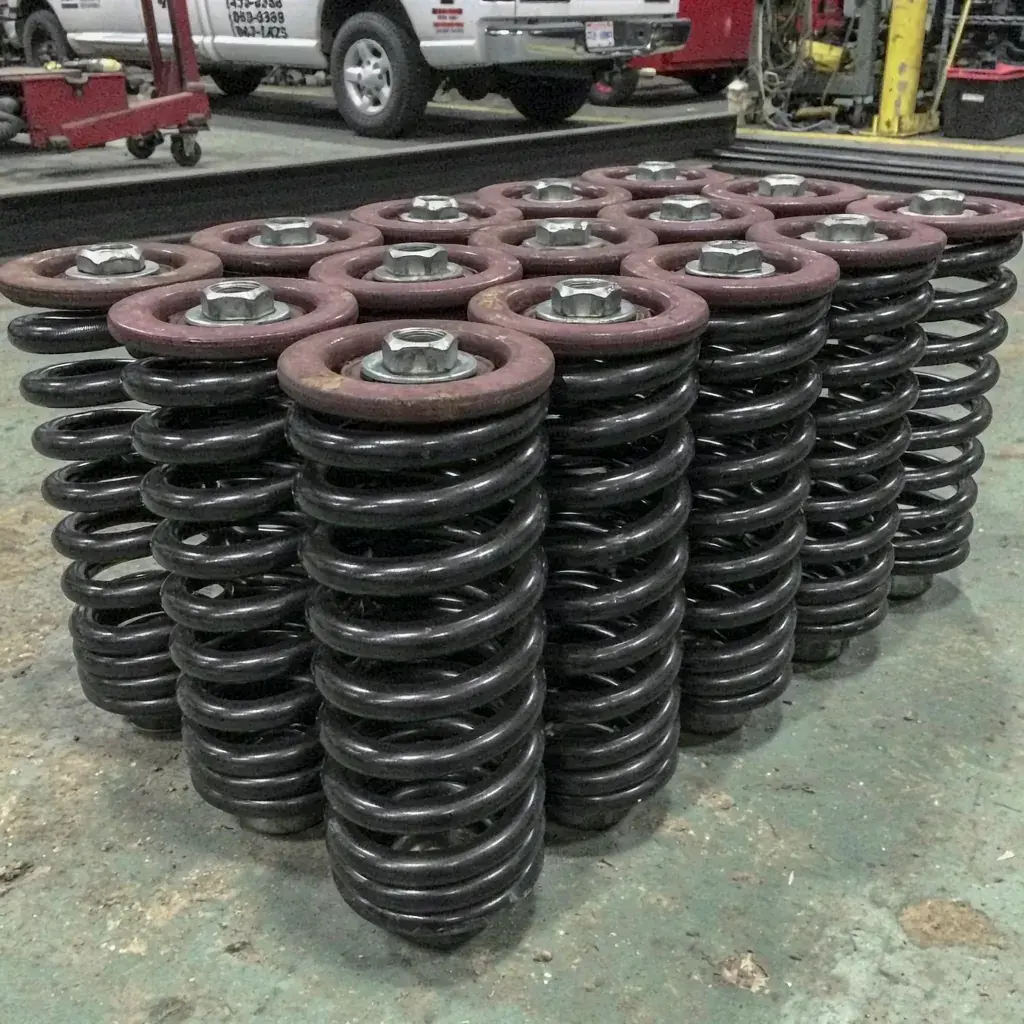
A torsion spring sits above the opening and twists as the door moves. A light silicone film can reduce rubbing between its exposed coils. It cannot repair a worn or broken spring. Near Oak Grove Park, a homeowner may notice a dry sound before seeing any other change. Listen during normal operation from a safe position. If the door starts moving unevenly or feels heavier, leave the spring alone and arrange a professional assessment. Do not try to correct the sound by turning spring hardware.
Use a product labeled for garage doors and apply it sparingly to accessible joints. Keep the door under normal control while applying spray, and avoid reaching across moving parts. A cloth can catch drips without contacting loaded hardware. Do not spray the track or coat every surface. In Flower Mound, dust caught in excess lubricant can make roller travel rougher. If the product does not quiet a joint, stop adding more; persistent noise may come from wear or misalignment.
Treat Rollers and Hinge Pivots
Bearings support rotation at the shaft ends, so a small amount of silicone lubricant may reduce dry friction there. Apply only to a surface that is visible and safely reachable. The bearing’s job is to let the shaft turn; it does not set spring tension. Near Bicentennial Park, a homeowner can observe whether normal movement sounds smoother afterward. A rough grind, wobble, or continuing noise calls for inspection. Do not loosen brackets or fasteners to reach the bearing.
A squeak near a hinge can signal friction where its pivot turns during door travel. Apply it to a cloth or aim carefully at the contact point; excess can collect dust. Rollers and hinges guide each panel, while bearings reduce friction as the shaft turns. If these parts bind, the spring carries added strain. A small shop door near Lake Lewisville has the same moving contacts. Keep spray off the track surface and door panels. Choose silicone lubricant; no WD-40. Lubrication can quiet friction, but it cannot restore a worn spring.
Choose silicone lubricant rather than a thin penetrating oil. Thin oils can wash away and leave grit at moving joints. WD-40 is not a lasting garage-door lubricant. Apply the product according to its label, then wipe off excess so it does not drip onto the floor or collect debris. In Flower Mound, this restrained approach keeps lubricant near the contact point that needs it. If a part cannot be reached without handling tension hardware, leave it for a professional.
Keep Lubricant off Tension Hardware
At a Flower Mound property, a door that grows heavy or moves unevenly may have a spring that no longer balances its load. Adding lubricant may quiet coil friction, but it cannot return lost lifting force. Do not try to correct that change by turning or loosening anything on the tension system. A home near Old Town and a small commercial door both depend on correctly matched spring force. The spring and related lift hardware work together to support the door as it moves.
A new gap in a torsion coil, a loose cable, or a door that suddenly feels heavy means lubrication is not the next step. A cable that slips out of place can tangle with moving hardware as the door travels. A small commercial door deserves the same stop rule as a home garage. If the door moves unevenly or will not stay under normal control, leave it closed if possible. Do not test its balance or try to free stuck hardware yourself.
Know When Lubrication Falls Short
Apply lubricant to hinge pivots and roller bearings, keeping it off the track. Observe one normal cycle from clear of the door’s path; smoother, quieter travel suggests friction was involved. Around Unity Park, the same rule applies to a home door or a small business opening. If the noise continues, changes to grinding, or comes with jerking movement, stop operating the door. More spray is unlikely to solve worn or binding hardware.
Call when a door grows heavy, travels unevenly, or shows a broken coil or displaced cable. Those signs point beyond ordinary dry contact, and operating the opener may add strain. A Flower Mound homeowner should leave winding parts untouched while the door is assessed. A small commercial property should also keep people clear of a door that shifts or hangs. If the condition is uncertain, stop using the opener and let the pros we connect you with inspect it.
Apply Lubricant at Moving Contacts
- Apply a small amount of garage-door silicone lubricant to accessible coils, bearings, roller bearings, or hinge pivots; wipe away drips and excess.
- Leave tracks dry, and keep hands, tools, and spray away from winding hardware, cables, drums, and bottom brackets.
- Stop using the opener if the door turns heavy or uneven; lubricant reduces friction but cannot restore spring lift.
- Apply silicone lubricant across exposed spring coils and at bearings; use a thin coat, then wipe away drips before dust collects.
- Lubricate roller stems and hinge pivots sparingly; keep the track running surface free of oil so debris does not build up.
- Do not use WD-40 as lubricant or handle winding parts; a heavy or crooked door needs inspection because spray cannot renew spring lift.
Questions Answered
Is silicone spray or lithium grease suitable for garage door springs?
No. WD-40 is not a suitable lasting lubricant for garage-door springs or moving joints. Use silicone lubricant labeled for garage-door use on accessible coils, bearings, rollers, or hinge pivots. Apply a small amount and wipe away excess. Keep it off the tracks, cables, drums, and winding hardware. If the door is heavy or uneven, stop operating it instead of adding more product.
Should I lubricate the garage door track or only its rollers?
A squeak may fade when it comes from dry contact at an accessible roller bearing or hinge pivot. Apply a little silicone lubricant, then observe normal movement from a safe position. Continued noise, grinding, or uneven travel suggests a worn or binding part. Stop using the opener if movement changes or the door feels heavy. Lubricant cannot correct those conditions.
How can I tell a dry hinge from a tired spring?
A light silicone application can quiet rubbing at exposed spring coils, but it cannot restore spring strength. If a door remains heavy or moves unevenly, stop operating it and leave the tension hardware alone. The sound may be a warning of a mechanical problem, rather than a request for more lubricant. Have the loaded parts assessed.
Is the Door Still Heavy or Crooked?
The floor-level safety sensors help the door detect objects in its path while closing.
Call +12148075085